Maximizing the production of a well equipped with a pump is easy to understand. In most cases, it involves measuring the oil submergence above the pump. High submergence indicates the possibility to pump at a higher rate, which can be achieved by accelerating the system.
Inject the Gas Lift as deep as possible
To maximize the production of a Gas Lift well, the target is to inject all the Gas Lift as deep as possible. To reach that deepest point, intermediary injection points are needed. A Gas Lift well is therefore equipped with several Gas Lift valves (each valve is installed in a Gas Lift mandrel). When starting the well, Gas Lift is initially injected through the shallowest valve, and the injection will then switch to the next valve and do so until it reaches the deepest valve.
Gas Lift optimization is more complexe than for other artificial lift methods
All this sequence is regulated by valve calibration before their installation. This calibration requires assumptions on the well behavior which is hard to predict. It is therefore, a complex process. Ensuring that gas is injected through the deepest possible valve is therefore much more complex to achieve than achieving the optimization of a well artificially lifted with a pump.
The monitoring of a Gas Lift well is more complexe than for other artificial lift methods
Monitoring a well equipped with a pumping system is also rather easy. Indeed, such systems are fitted with surface equipment where either mechanical or electrical status can be checked (for instance the speed of rotation of a PCP or rod pump engine, or the electric power consumption of an ESP motor). Pumping systems are often equipped with a downhole gauge to monitor submergence above the pump. Alternatively shooting the fluid level with an echometer is also a widely used method to perform this monitoring.
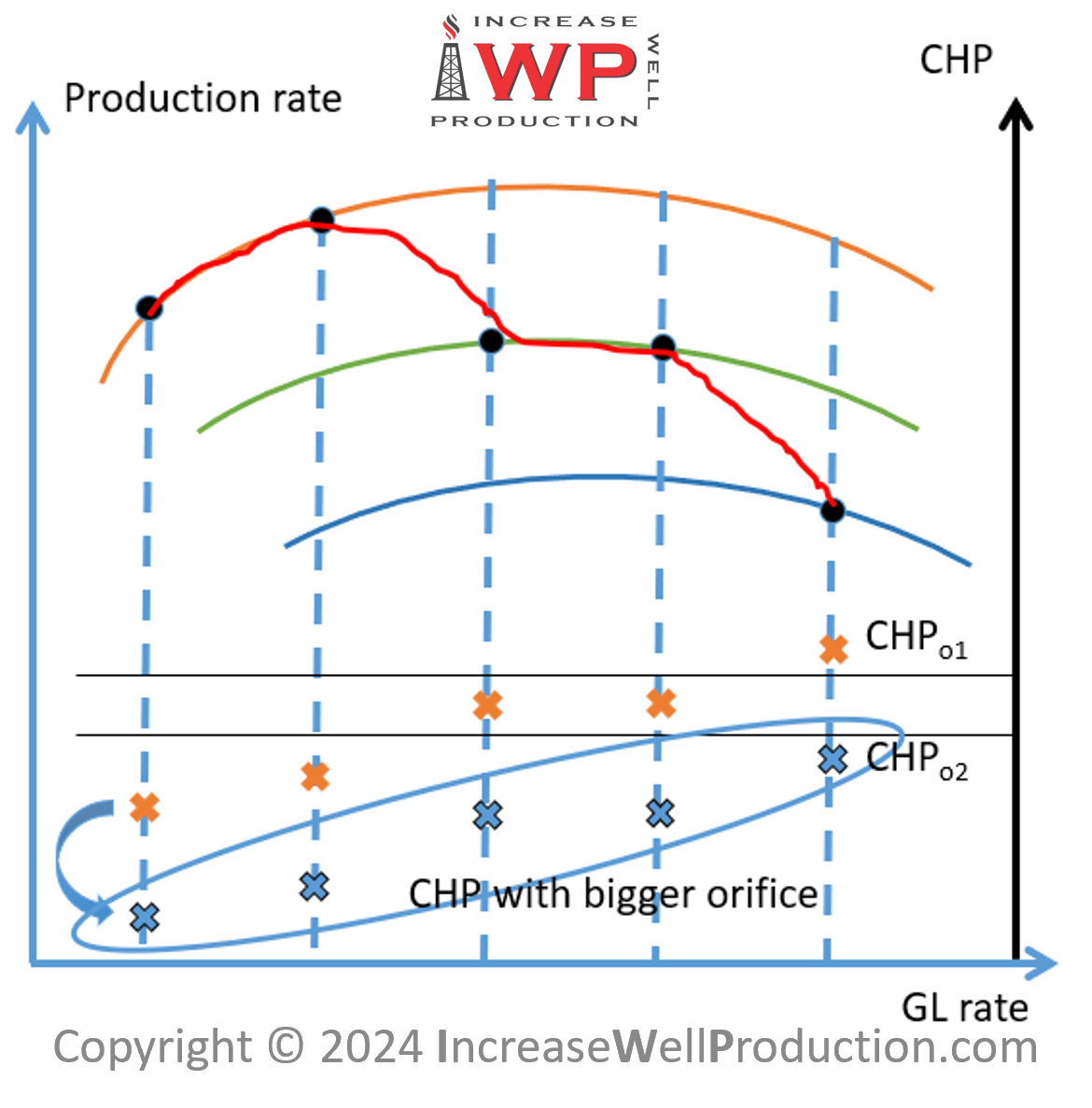
On the other hand, knowing where the Gas Lift is injected requires nodal analysis using the latest well production data. Moreover, Gas Lift well are seldom equipped with downhole gauges. This makes the monitoring much more complex as it is harder to understand what happens. One could say that you can’t “touch things” like with a pump.
Gas Lift wells are less understood by E&P companies
For these reasons and many others, monitoring, optimization, and troubleshooting of pumping systems are much better handled by E&P companies than it is for Gas Lift.
Next:
- The main components of a Gas Lift System
- Most common issues with Gas Lift that require troubleshooting