Gas Lift Unloading Sequence and Mandrel Spacing Design
Current Status
Price
Get Started
| Format | On-demand 24/7 |
| Access | 1 year unlimited for 1 person |
| Duration | Approx. 5.5 hrs |
| Certificate | Included w/ 5.5 PDH credits |
| Level | Intermediate to advanced |
| Language | English |
Participants will acquire a deep understanding of how the gas lift unloading sequence works. They will be able to connect all well parameters during that production phase. This is key knowledge for gas lift optimization and troubleshooting of any well.
They will be explained the concept of gas lift mandrel spacing design through an exercise and will be coached so that they can perform such a design themselves manually or by using a nodal analysis software to assist them (Prosper). The topic of integrity in gas lift well will also be covered in detail.
According to many industry experts, Gas Lift is the least understood artificial lift method, but its complexity is not the reason behind its misunderstanding. Instead, the challenge behind Gas Lift is that after implementing a lousy design, the well will often keep producing, unlike other artificial lift methods (e.g., ESP) that stop producing. Thus, operators fail to recognize design or operating errors that restrain production.
Therefore, there is a significant potential to increase production by oil and gas professionals who understand the Gas Lift system and its fundamental and advanced principles.
The gas lift training ‘Gas Lift Unloading Sequence and Mandrel Spacing Design’ covers various topics like gas lift initial unloading, routine start-up of a gas lift well, and how to do a mandrel spacing design for optimal performance of the gas lift system.
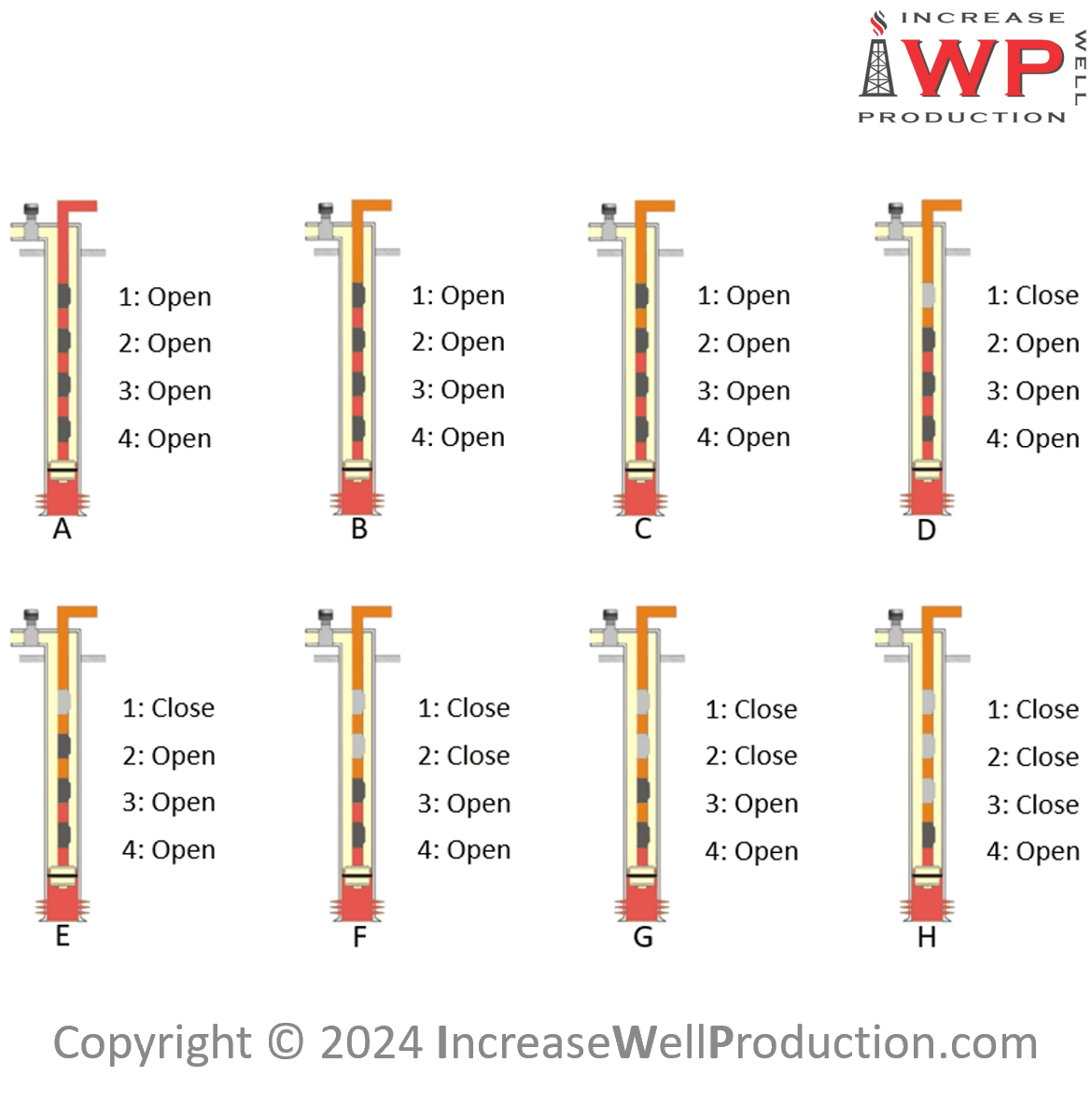
This gas lift course starts by detailing the gas lift unloading sequence (evolution of tubing and casing pressure profile, CHP, WHP, and valve status during the gas lift well start-up) with IPO and PPO valves.
The course also provides an excellent platform for operators to gain in-depth knowledge of the challenge of integrity in gas lift wells. It will teach the best industry practices and existing solutions to mitigate the specific risks linked to gas lift.
Students will then be guided to make the gas lift mandrel spacing design of a well (number of gas lift mandrels required and at which depth each should be installed) without using any software. Hence, they will understand the fundamental principles of gas lift and know how to select their gas lift well design parameters properly (e.g. kick-off pressure). Advanced notions like the gas lift equilibrium curve, maximum rate estimation, and temperature models are explained clearly to bring every student to a high level of autonomy when dealing with gas lift design.
The last part of the training explains how to make such a mandrel spacing design using the nodal analysis software Prosper. Students will be guided within the “GasLift Design – NEW WELL” form in Prosper (meaning of each parameter to be filled and recommendations on best industry practice). Hence, with our ‘Gas Lift Unloading Sequence and Mandrel Spacing Design’ course, you will better grasp the different options available in Prosper to be in control of your gas lift design.
This lesson is the 3rd of a series of 5 designed to help you reach an advanced level in gas lift oil production and operations. It follows the 2 courses ‘Forms of Gas Lift’ and ‘Gas Lift Equipment’ and precedes the courses ‘Gas Lift Optimization and Design with Existing Mandrels’, and ‘Gas Lift Troubleshooting’.
- Unloading the well basic principle
- Integrity in gas lift well
- Initial unloading following a drilling or a WO (how to empty your casing of the mud/brine without damaging your valves)
- Unloading sequence with IPO valves
- Unloading sequence with PPO valves
- Gas lift unloading principle explained by counting bubbles of gas
- Gas gradient formula and rule of thumb to quickly calculate your casing pressure at any depth
- Put it all together with an exercise (inflow/outflow/mandrel spacing design)
- Unloading sequence videos from suppliers
- Why installing a gas lift mandrel in a well portion where deviation is higher than 60°
- Gas lift system (fundamental principles, maximum rate estimation, equilibrium curve)
- Mandrel spacing design principles (where should you install your gas lift mandrels and how to do that manually)
- Temperature models
- How to choose your kick of pressure
- Guidelines to make a mandrel spacing design with Prosper (how to fill the “GL design new” form in Prosper).
- Production, Petroleum or Well Performance Engineers to understand how the Gas Lift unloading sequence works and how to make a mandrel spacing design
- Field Production Personnel to understand how their Gas Lift well work and respond better to the questions of their support teams in town
- Completion Engineers to understand fully the needs for mandrels in a Gas Lift well.
Course rating
Rate the course
Excellent application in Prosper
The application in Prosper was Excellent – Without a doubt it’s the biggest highlight of the entire module. Being able to see the concepts applied directly in the software made a huge difference – it’s not easy to find Prosper material with such clarity.
Step-by-step course structure
The content of the course adequately covers all the essential knowledge and tools required to execute a comprehensive design of the GL SPMs. It enables individuals to acquire advanced proficiency in the subject matter.
+ PROS:
– Step-by-step course structure
– Details
– High quality content
Highly recommended to anyone working with gas lift
I highly recommend the Gas Lift Unloading Sequence and SPM Design course to anyone working with gas lift including production and field engineers, as well as operating staff to better understand gas lift.
A course that you have to take
This course was one of my favorites. It allows you to clearly know unloading sequence of a well, you will also be able to know the process to be able to design a well with GL. The step-by-step guide for Prosper is very practical and clear. The videos and PPT are really very clear and very easy to understand, it is definitely a course that you have to take.
Extremely informative lectures
Extremely informative lectures. I haven’t seen such good explanation for many of the topics anywhere in the industry. Well done !
Very thorough gas lift course
Very thorough gas lift course. Damien is passionate and knowledgeable.
Pros: Covers many topics; Good video and sound quality
Packed full of Information!
This Module does a great job of going over the unloading sequence and various methods that can be used to space valves from simple methods all the way to using Prosper Nodal Analysis program.
Good Summary on the Gas Lift Unloading Sequence
Course helps to visualize how the valves operate in sequence to displace the annulus fluid out and put the well on production.
Very good training
Good course. Thank you…
Loved the entire training session
Great experience, very well explained about each topics. Nicely presented. Great exercises sessions. Thank you.
Detail and Patience Explanation
This course covered detail gas lift unloading system theory and real lift application explanation. Very clear different valve type (IPO & PPO) unloading example and video visualization to understand the theory. Besides, very good and clear guideline on gas lift design.
Excellent !
Great topics. Excellent exercises and explanation.
Unloading Process Explained
Finally I get to understand how the unloading process works. Very well explained and visually clear.
