Gas Lift Optimization and Design with Existing Mandrels
Current Status
Price
Get Started
| Format | On-demand 24/7 |
| Access | 1 year unlimited for 1 person |
| Duration | Approx. 5 hrs |
| Certificate | Included w/ 5 PDH credits |
| Level | Advanced |
| Language | English |
Participants will acquire a deep understanding of how to optimize gas lift wells. Through the review of cases, they will learn how to recognize a gas lift well that can be optimized and see how to achieve it with the right gas lift operation. This is key knowledge to be able to increase the production of any gas lift well.
Participants will be explained the concept of Gas Lift design through an exercise and will be coached so that they can perform such a design themselves using a nodal analysis software to assist them (Prosper).
According to many industry experts, gas lift is the least understood artificial lift method, but its complexity is not the reason behind its misunderstanding. Instead, the challenge behind gas lift is that after implementing a lousy design, the well will often keep producing, unlike other artificial lift methods (e.g., ESP) that stop producing. Thus, operators fail to recognize design or operating errors that restrain production.
Therefore, there is a significant potential to increase production by oil and gas professionals who understand the gas lift system and its fundamental and advanced principles.
This gas lift training teaches practical ways to design and recommend efficient adjustments necessary to get better production from already operating gas lift wells. Our knowledgeable instructor will help you learn about gas lift design factors for various situations so that you can confidently achieve gas lift well optimization.
With this targeted gas lift course students will learn how you can optimize the production of a Gas Lift well with its current gas lift design as well as how you could optimize it by changing the gas lift design using the existing side pocket mandrels.
First, you will gain the necessary knowledge and skills to properly monitor any gas lift well. Well test setup will be presented, with the corresponding metering equipment. Calibration and measurement errors will be discussed so that monitoring can be improved. A review of the available technologies for downhole pressure and temperature gauge will be presented.
Then different levers to achieve gas lift well optimization are presented in the next section of the training. Students will be shown how to increase their gas lift well production by adjusting the gas lift rate, optimizing the choke position, and performing a global gas lift network optimization. A case review then shows how to optimize a gas lift well through a gas lift design change using the existing side pocket mandrels. A practical method is explained so that students can quickly detect the wells in need of gas lift optimization, just by taking a look at surface parameters. The instructor will also explain when the optimization requires pulling the completion for a change of the mandrel spacing design.
Students will then be guided to make the gas lift design of a well using abacus (which mandrels should be equipped with a valve, a dummy, or an orifice) so that they can understand the principles behind these choices and how to select their parameters properly (e.g. kick-off pressure). The next part of the training explains how to make such a gas lift design using the software Prosper. The instructor will do a comprehensive review of the “GasLift Design – EXISTING MANDRELS” form in Prosper (meaning each parameter to be filled and recommendations on the best option to select).
The topic of dual gas lift completion well is covered in the last part of this training. This subject is rarely covered in gas lift training. This course presents the instructor’s design and optimization method for such wells, using IPO valves. Students will benefit from the instructor’s knowledge and experience to solve the mystery of dual gas lift completion wells and avoid the common mistakes to unlock the production of these wells.
This lesson is the 4th of a series of 5 designed to help you reach an advanced level in gas lift oil production and operations. It follows the 3 courses ‘Forms of Gas Lift’, ‘Gas Lift Equipment’, and ‘Gas Lift Unloading Sequence and Mandrel Spacing Design’, and precedes the course ‘Gas Lift Troubleshooting’.
After completing this program, you will have the skills to develop and implement appropriate gas lift optimization strategies for efficient and cost-effective production that brings maximum value from any gas lift system.
- Optimization starts by good monitoring
- Optimization by Gas Lift rate change
- Gas Lift design optimization – cases review
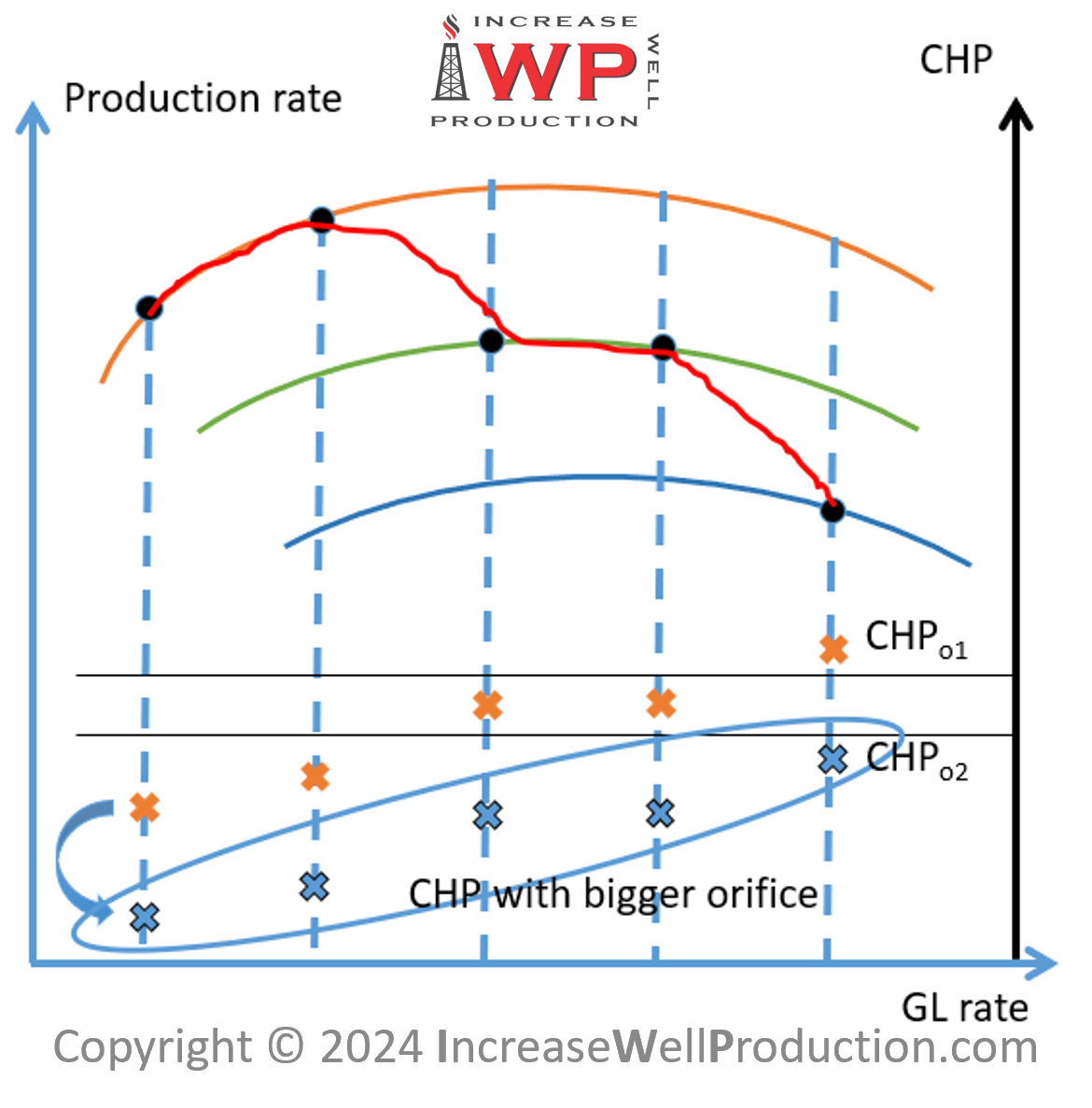
- Can I optimize a Gas Lift well by choking it?
- Global network optimization
- How to identify Gas Lift wells that can be optimized
- Exercise – Propose a Gas Lift design for a well using abacus
- Why changing your mandrel spacing design?
- Why changing your Gas Lift design using existing mandrels?
- How to determine the targeted liquid rate of a well following a Gas Lift design
- Process to perform a Gas Lift design using Prosper
- How to fill the “Gas Lift design – Existing Mandrels” form in Prosper
- Dual Gas Lift completion optimization and design
- Production, Petroleum or Well Performance Engineers to understand how to increase the production of their Gas Lift wells, how to monitor them properly and how to make a new Gas Lift design
- Field Production Personnel to understand how their Gas Lift well work and respond better to the questions of their support teams in town
- Completion and Well Intervention Engineers to understand fully the needs for a new Gas Lift design.
Course rating
Rate the course
Explanations given create an amazingly easy way of understanding the subject
This is an excellent module of the Gas Lift Training Course provided by IWP because it combines: a) solid theoretical fundamentals, b) plenty of design and troubleshooting tips with great practical applications and, c) up-to-date design and troubleshooting procedures using Prosper, the most widely used software in the oil industry today.
The way the topics are presented follows the exact logical steps that should be taken to make sure the liquid production is optimized and with the minimum gas consumption possible for the operating conditions in the field.
I found it very important that the module pays close attention to “how and why” well monitoring of surface parameters, well tests, and downhole monitoring with pressure and temperature gauges should be performed because these activities are the foundations of the optimization process. This part of the module is full of practical advices that are given in a way that makes it easy for participants to learn very fast all the important details that will allow for an assertive optimization analysis. The explanations are given with excellent pressure and temperature traverse curves that create an amazingly easy way of understanding the subject. Downhole monitoring is presented with many details on the field techniques and equipment that should be used.
The optimization process begins with a very clear explanation of the “liquid production vs. the gas injection rate” curve, clearly indicating which gas injection rate should be the optimum one and why.
Several ways of optimizing gas lift designs are beautifully explained with the help of pressure-depth diagrams, showing the liquid pressure traverse curve, the gas injection pressure line, and the relative position of the opening and closing pressures of the valves that makes it enjoyable for the student to learn, very fast, how to optimize the design by injecting gas deeper without risking gas lift stability. Clever explanations are given to didactically show what to do if the injection pressure is too low to go deeper when there are opportunities to place dummies above the current point of injection. All these explanations are complemented with an excellent real case example.
The gas lift system optimization covers well-explained ways of increasing the liquid production by brilliantly going from explanations that start at the well itself and then go to all components of the system (the gas compression and distribution system, as well as the gas and liquid gathering network) with plenty of actions that can be taken to achieve the goal of getting the best out of the gas lift system, eliminating, or reducing, large capital investments.
Practical tips on how to quickly identify wells that can be optimized are important actions that all optimization teams should constantly perform and these are all very well explained in the module so that the students can immediately apply them in their field.
A very detailed explanation on why a change in the gas lift design might be needed is carefully presented, together with plenty of opportunities to seek after, either for a new gas lift mandrel spacing, or when using the current gas lift mandrels installed in the well. Great explanations for selecting the most appropriate kick-off pressure and target liquid flow rate to use for the gas lift design are given with the help of didactic pressure-depth diagrams that are easy to fallow and which constitute a pleasant way of learning important gas lift design parameters very fast.
Excellent and thorough explanations are brilliantly explained in the module on Prosper: a) how to use Prosper (using existing mandrels) to prepare your well model, b) use the well model to perform a gas lift design and, c) test the design.
High content quality
The course exhibits exceptional intuitiveness and has been thoroughly documented. As with all other modules, the instructor has exerted significant effort in delivering top-quality content to equip new artificial lift engineers or petroleum engineers with the necessary skills to effectively implement a GL design.
+ PROS:
– Step-by-step course structure
– Level of details
– High content quality
Highly recommended to production engineers
Excellent gas lift overview of all gas lift considerations regarding optimization and design, I would highly recommend this course to production engineers and field staff overseeing their gas lift wells.
Excellent course
This course is my favorite. As its name indicates, it allows you to clearly know different ways to optimize a well with GL and the different operating parameters that must be taken into account in order to have a more complete and successful optimization work. It also allows you to know how a GL design is made with existing spindles. The guide to using Prosper is very clear and helpful. Excellent course.
Great structured material
Excellent Course. Great structured material.
Informative
Informative
Excellent application in Prosper – Highly comprehensive material
Excellent theoretical and practical foundation – the exercises and concepts were well done and provided good coverage of the topic. One subject I found missing and that would be important to include is the relationship between water conning and gas lift injection.
Response from Increase Well Production
Thank you Kaio for the positive review and glad that you enjoyed this course (as well as the others that you followed).
Water conning is not directly linked to gas lift but to drawdown (which indeed can increase with gas lift injection). For that reason, this topic is covered in my ‘Well Inflow’ course as conning is not a specific issue of gas lift and can happen with any form of artificial lift. As my content is already quite rich and long to complete, I avoid duplicating topics from one course to the other.
This is a very interesting training section.
Covered a lot of important topics related to Gas lift Technology. Thank you so much for gathering all the informations.
Very Good Training Section.
Very nice.
Amazing Gas Lift Learning Platform
Each topics has been explained very well with good examples and tips. Entire session was very interesting one.
Practical application and positive results
This training was very clear, practical, and direct. I could apply what I learned in my work, improving and achieving positive results. I highly recommend this course for those seeking applicable and efficient learning.
GL Design
I have been working a long time in Prosper and just following the memorized steps of a simulation program. It is amazing that now I get to know in deep the physics and logic that supports all the GL phenomena and purpose and causes of each values that I handle everyday.
Great lessons. I have learnt in design and redesign of a GL completion. Specially by explaining the concepts using the Prosper software. Feeling more capable of screening better GL optimization opportunities.
